
If you’re researching permanent facial hair removal, you’ve noticed that most methods don’t qualify as permanent. Lasers are FDA-cleared for hair reduction, not removal. Waxing, threading, depilatories, and shaving have to be redone indefinitely. Only one method holds the FDA designation of permanent hair removal: electrolysis.
The trade-off is time. Electrolysis treats each follicle individually, so sessions take longer than laser. That hair-by-hair pace is also why results are permanent, since every treated follicle receives a current calibrated to destroy it. This guide covers how facial electrolysis works, which areas it’s best for, what each session feels like, and realistic timelines for the upper lip, chin, sideburns, jawline, and other facial zones.
Key Takeaways
- Electrolysis is the only FDA-recognized method of permanent facial hair removal. Laser is FDA-cleared for “permanent reduction” only, not removal.
- It works on every hair color and every skin tone. White, gray, blonde, red, and dark hair all respond. Skin tone doesn’t affect safety or results because no pigment is targeted.
- Each follicle is treated individually. Sessions take longer than laser, which is also why the results are permanent.
- Most facial areas need 8 to 18 months of consistent sessions for full clearance, with hormonally driven hair sometimes needing longer.
- Common treatment areas include the upper lip, chin, sideburns, jawline, cheeks, neck, between the brows, and brow shaping.
- Facial skin is more sensitive than body skin, so topical numbing cream is widely used and aftercare matters more.
- If hormones are driving the hair (PCOS, perimenopause, thyroid, certain medications), pairing electrolysis with medical management produces the best long-term outcomes.
Why Facial Hair Is Different
The face is one of the most androgen-sensitive areas of the body, which means it’s the first place excess hormonal hair tends to appear. Genetics and ancestry shape the baseline, while life-stage hormonal shifts add to it over time. Roughly 5 to 10 percent of women of reproductive age have hirsutism (excess terminal hair in male-pattern areas like the chin, upper lip, and jawline). That figure rises sharply with conditions like polycystic ovary syndrome (PCOS), where the rate climbs to around 70 to 80 percent.
Temporary methods also have specific problems on facial skin. Shaving causes stubble and can irritate sensitive zones. Waxing pulls at thin facial skin and causes ingrown hairs along the jawline. Daily tweezing distorts follicles and creates uneven regrowth. Threading is precise but can cause hyperpigmentation on darker skin tones. Depilatory creams are formulated for body skin and frequently burn or trigger contact dermatitis on the face. Even at-home laser devices struggle on small precision areas and on the lighter or graying hairs that often show up on the face first.
Electrolysis addresses these issues. It removes facial hair permanently, works on any color and any skin tone, and offers the precision facial work requires.
How Electrolysis Works on Facial Hair
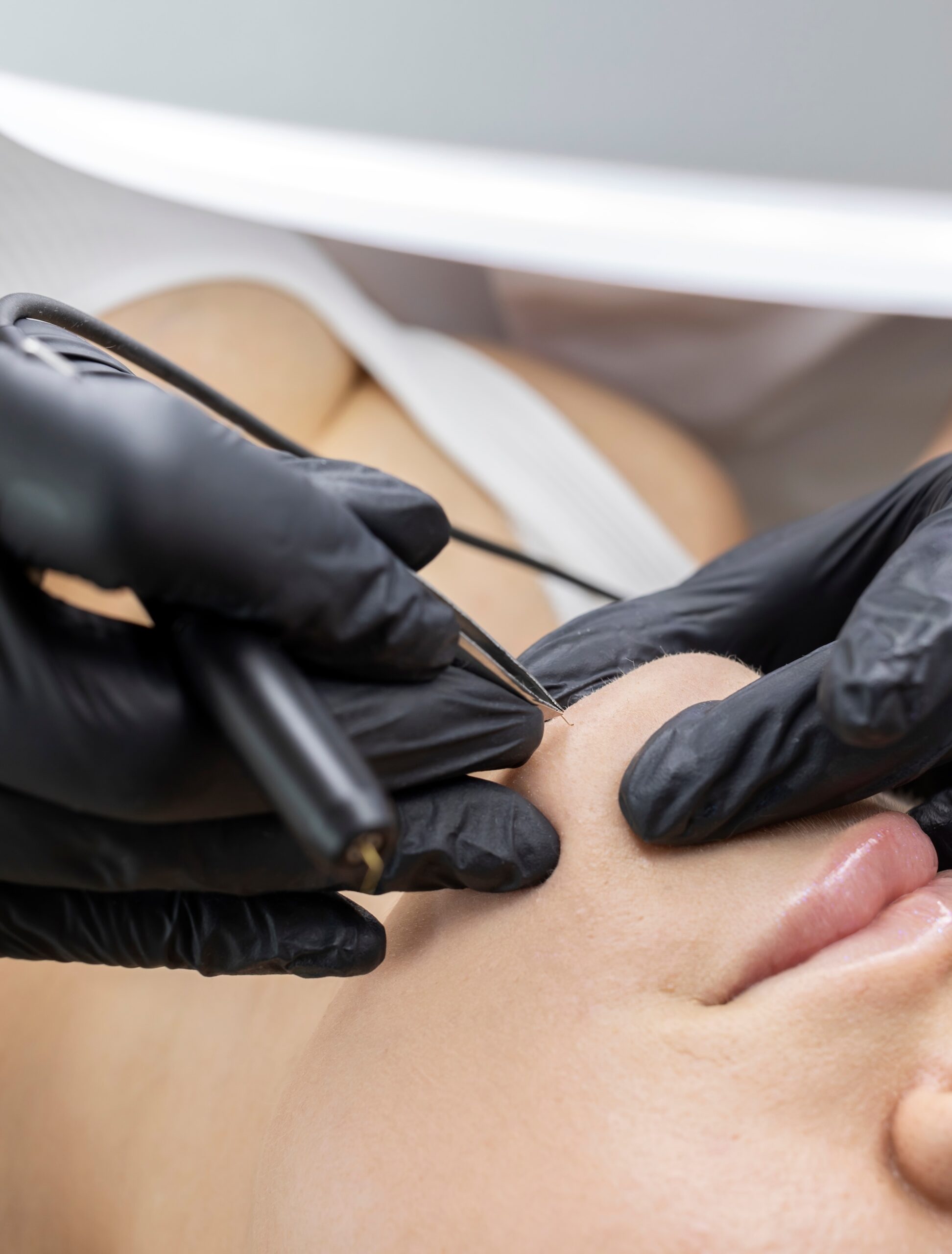
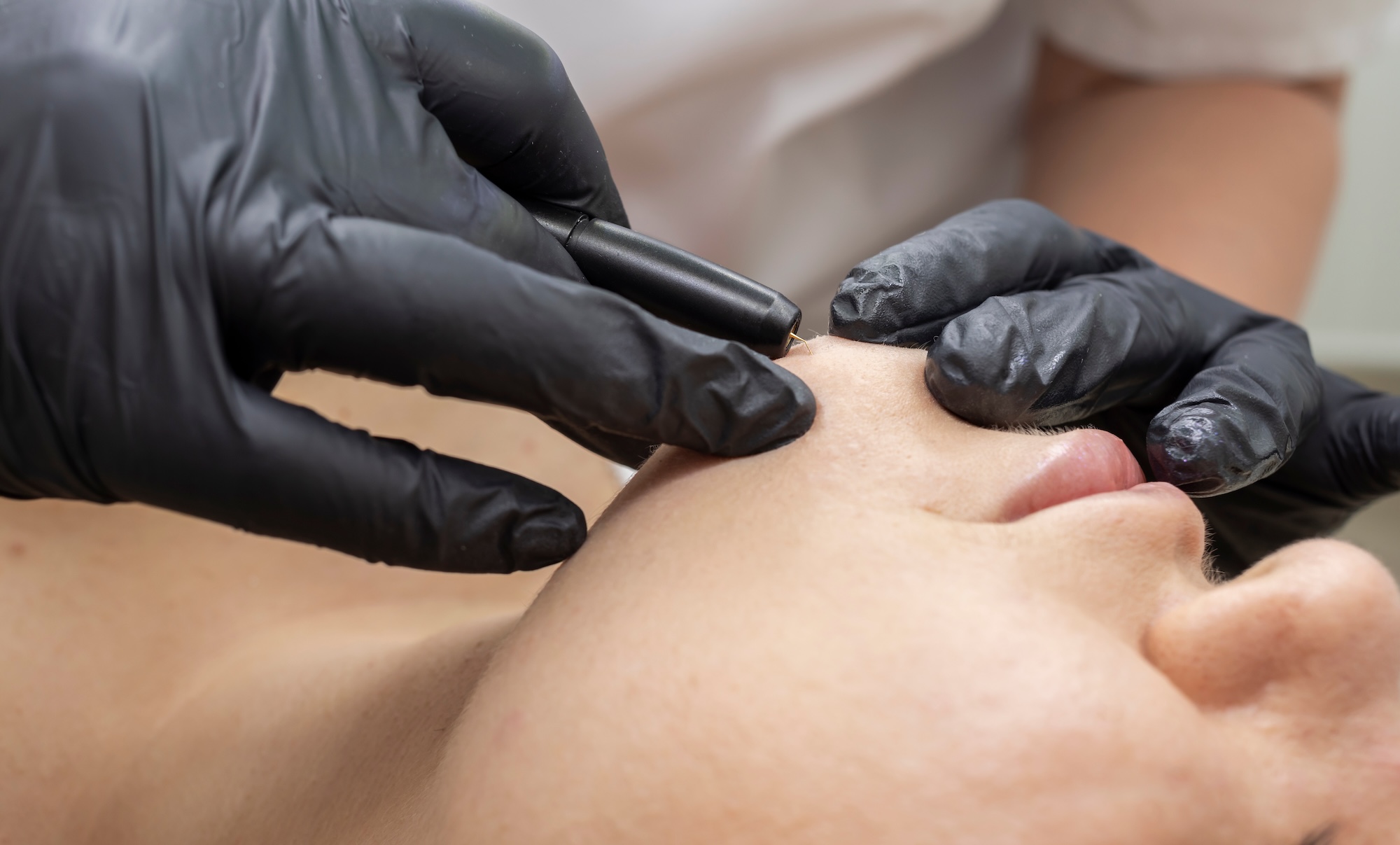
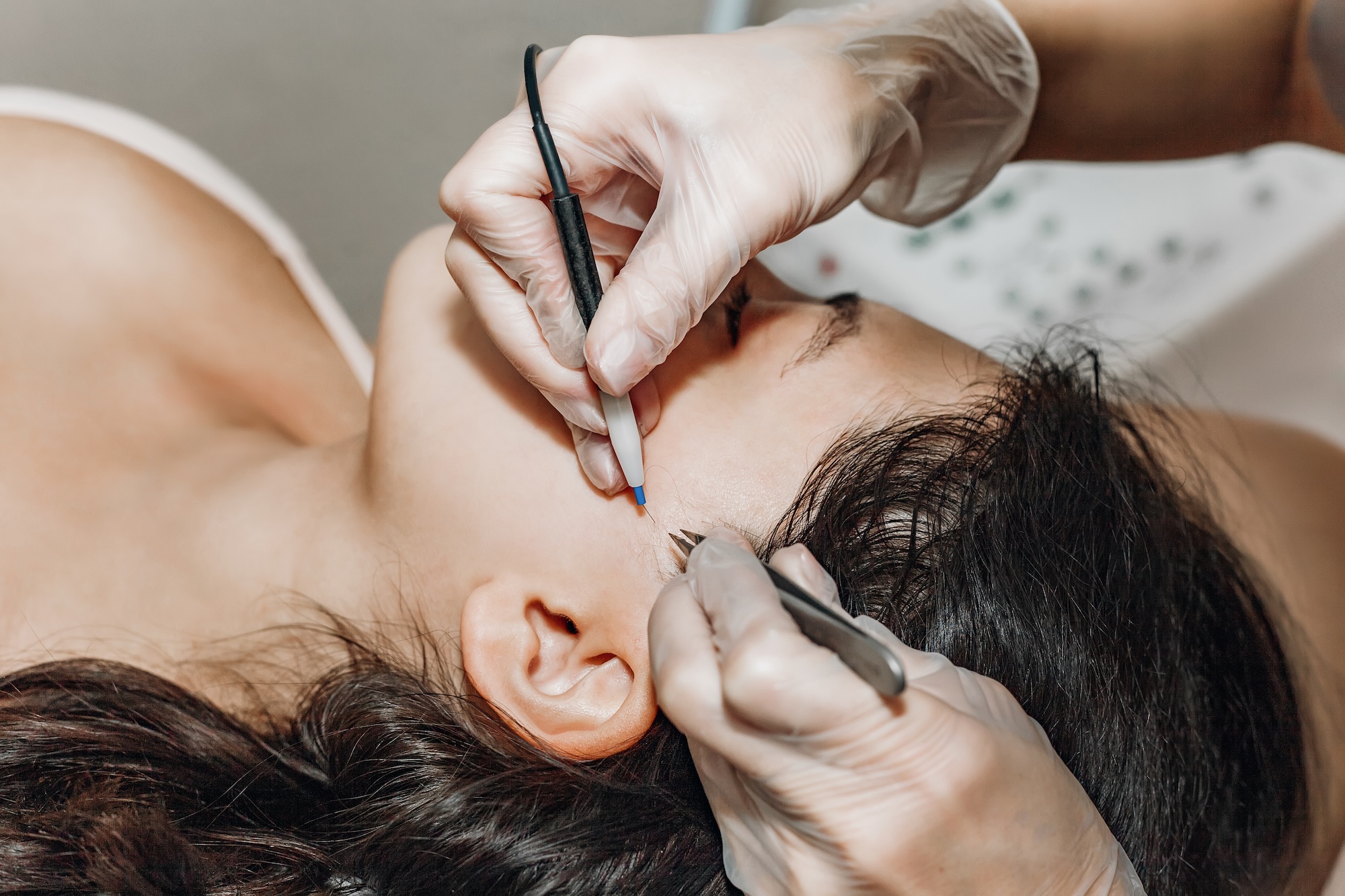
The procedure is mechanically straightforward. A fine, sterile probe (often thinner than the hair itself) is inserted into the natural opening of an individual follicle. A precisely controlled electrical current is delivered, destroying the cells that allow that follicle to grow hair. There are three FDA-recognized modalities:
- Galvanic uses direct current to chemically destroy the follicle by producing sodium hydroxide (lye) at the base.
- Thermolysis uses high-frequency alternating current to heat and destroy the follicle.
- Blend combines galvanic and thermolytic action in a single insertion. Many electrologists prefer blend for stubborn, hormonally driven, or coarse facial hair, because it pairs the chemical destruction of galvanic with the speed of thermolysis.
At Laser Affair, every electrolysis session is performed using the Apilus xCell Pur, a computerized system that delivers the current with high precision and considerably less discomfort than older equipment. Precision is especially important for facial work, where each insertion has to be exact and the skin is more sensitive than body skin.
Because electrolysis targets the follicle directly rather than melanin in the hair shaft, hair color is irrelevant. White, gray, blonde, red, and dark hair all respond identically. Skin tone doesn’t affect outcomes either. For the regulatory and biological background on why electrolysis qualifies as permanent, see our deep dive on whether electrolysis is permanent.
The Trade-Off: Permanent Results, Hair by Hair
Electrolysis is slower than laser. Laser hair removal sends a beam of light across an area of skin, and the light is absorbed by pigment in many hairs at once, damaging multiple follicles per pulse. That speed is what makes laser efficient for body areas, and it’s also why laser is classified as reduction rather than removal. Because the energy spreads across an area, individual follicles often receive sub-therapeutic doses that damage but don’t destroy them. Hair eventually grows back, sometimes finer, sometimes the same.
Electrolysis takes the opposite approach. Each follicle is treated individually with a current calibrated to its specific depth and hair characteristics. The growth cells are fully destroyed. Once a follicle is properly treated, it cannot regrow hair. That’s why electrolysis carries the FDA designation of “permanent hair removal” while laser is limited to “permanent hair reduction.”
The arithmetic explains the time difference. A 60-minute electrolysis session can treat several hundred follicles depending on hair density and area. A 60-minute laser session can treat thousands. Laser wins on speed; electrolysis wins on permanence. For facial hair specifically, the hair-by-hair approach offers two advantages that compensate for the slower pace:
- Precision shaping. Brows, beard line, sideburns, and between-brow areas all benefit from individual hair removal that lasers cannot perform safely.
- Color independence. Lasers cannot effectively treat the lighter, finer, gray, or white hairs that often appear on the face first. Electrolysis treats all of them.
If your goal is the largest possible reduction in the fewest sessions, laser is the right tool for body areas where it’s a fit. If your goal is permanently removing facial hair, electrolysis is the method, and the time investment is the cost.
Common Facial Treatment Areas
Almost every part of the face is treatable with electrolysis. The notes below cover what people commonly come in for and what to expect by area.
Upper Lip
The most-requested facial electrolysis area, and one of the most sensitive. The upper lip is densely packed with nerve endings, so it tends to feel more intense than the cheeks or jawline. Topical numbing cream applied 30 to 45 minutes before the session helps significantly. Most people clear the upper lip in 8 to 18 sessions over 6 to 12 months.
Chin and Underchin
Chin hair is often coarse and hormonally driven, especially in women approaching perimenopause and in those with PCOS. The chin and area just below the jawline can hold a surprising number of follicles, including dormant ones that activate over time. Most people need 12 to 18 sessions for full clearance, though hormonal cases sometimes need more.
Sideburns
Sideburns are a common spot where hormonal shifts produce new hair, often softer and finer than the chin or lip. The sideburn area sits over the parotid gland and has good blood supply, so it tends to heal quickly between sessions. Sideburn clearance usually takes 10 to 18 sessions and can include precision shaping along the hairline.
Jawline and Neck
The jawline and front of the neck are common areas where laser-resistant lighter hairs appear. Electrolysis is well-suited here because the hair tends to be mixed in color and density. Treatment timelines vary widely depending on density.
Cheeks
Most cheek hair is vellus (peach fuzz), which can be treated but is time-intensive because of the sheer follicle count. Many clients choose to address only the most visible patches (areas that catch light or show in photos) rather than full clearance. Honest conversation with your electrologist about goals matters here.
Between the Brows and Brow Shaping
For people who want the unibrow gap permanently maintained or want to permanently shape the lower or upper edge of the brow, electrolysis is ideal. Tweezing forever works, but it can distort follicles and cause hyperpigmentation. Permanent removal in these small precision areas often takes only 4 to 10 sessions because the follicle count is low.
Pre-Surgical Clearance
Anyone preparing for facial gender-affirming procedures or other surgeries that require permanent hair removal in the surgical site should plan well ahead, often 12 to 24 months. Electrolysis is the standard of care here because every follicle in the surgical site must be permanently destroyed. See our gender-affirming hair removal page for detailed planning information.
What a Session Feels Like
Most clients describe each treated follicle as a brief, warm pinprick or a quick zap. The intensity varies by area: the upper lip and the bony parts around the chin and jaw tend to be more sensitive, while the cheeks and sideburns are usually milder. The sensation lasts a fraction of a second per insertion and your electrologist can adjust the energy level for comfort.
For sensitive areas, especially the upper lip, topical numbing cream applied 30 to 45 minutes before the session takes most of the edge off. Some people breathe through it without numbing and find it manageable. Modern equipment like the Apilus xCell Pur has substantially reduced the discomfort that older electrolysis systems were famous for.
After a session, expect mild redness and possibly slight swelling for a few hours, sometimes longer for very sensitive skin. Tiny scabs may appear at insertion points and resolve within a few days. The skin response on the face tends to be more visible than on the body because facial skin is thinner. This is normal and not a complication.
Treatment Timeline by Facial Area
Industry-standard timelines for facial electrolysis are reasonably consistent. Each session is short (15 to 60 minutes for facial areas), but you’ll need many of them, scheduled close together at the start and tapering as density decreases.
| Area | Typical Sessions | Total Timeline |
|---|---|---|
| Between brows / brow shaping | 4 to 10 | 3 to 6 months |
| Upper lip | 8 to 18 | 6 to 12 months |
| Chin and underchin | 12 to 18 | 9 to 18 months |
| Sideburns | 10 to 18 | 8 to 14 months |
| Jawline / neck | 12 to 25+ | 12 to 24 months |
| Full face | 30+ | 12 to 24 months |
Two factors matter most for staying on the shorter end of these ranges. Scheduling consistency is the first, because electrolysis only works on follicles in the active growth phase, and you can’t predict which ones are active on any given day. Not interfering with the hair between sessions is the second: shaving or trimming is fine, but tweezing, waxing, and threading distort follicles and make them harder to treat.
Aftercare
Facial skin needs more careful aftercare than body skin because it’s thinner, more visible, and exposed to sun, makeup, and active skincare ingredients daily. Standard guidance:
- For the first 24 to 48 hours: avoid sun exposure, intense exercise, hot showers, saunas, and any heat that triggers sweating. Skip makeup if possible.
- For at least 48 hours after: avoid retinol/retinoids, AHAs, BHAs, vitamin C, and exfoliants on the treated area. These compound irritation.
- Apply a broad-spectrum SPF 30+ daily throughout your treatment series. The face is the most sun-exposed area you have, and post-electrolysis skin is more vulnerable to hyperpigmentation if exposed.
- Use cool compresses or aloe vera if redness or sensitivity persists.
- Don’t pick at scabs. They protect the healing follicle. Picking can cause hyperpigmentation or, rarely, small scars.
When Facial Hair Has a Hormonal Cause
For many women, facial hair tracks back to hormones rather than to a hair-removal problem alone. PCOS is the most common cause. Perimenopause, postmenopause, thyroid imbalances, and certain medications (some hormonal contraceptives, steroids, anabolic medications) can also increase facial hair growth.
The Endocrine Society’s clinical practice guideline for hirsutism recommends starting with pharmacologic therapy (typically combined oral contraceptives, sometimes paired with antiandrogens like spironolactone) and adding direct hair removal methods like electrolysis for additional cosmetic benefit. Medication slows new vellus follicles from converting into terminal hair, while electrolysis permanently removes the follicles already producing it. Together, they break the cycle in a way neither does alone.
If you have or suspect PCOS, our PCOS-specific electrolysis guide walks through the combined medical-and-cosmetic approach in more detail. The short version: get the underlying evaluation, talk to your doctor about the medical side, and pair that with electrolysis. Combined results are dramatically better than either approach alone.
Costs
Electrolysis is priced by time rather than by area, because each minute of work treats roughly the same number of follicles regardless of where on the body you are. Sessions typically run from 15 to 60 minutes and cost $60 to $190 depending on session length and treatment area.
Total cost depends on hair density, the specific area being treated, and individual hair growth cycles. These are evaluated during your consultation, where your electrologist can give you a personalized estimate based on what they actually see.
Insurance generally doesn’t cover electrolysis for cosmetic indications, though some plans do cover it for gender-affirming care. Many clinics offer package discounts for prepaid blocks of sessions.
Skin Tone Considerations
Electrolysis is safe for every Fitzpatrick skin type because it doesn’t target pigment. There’s no risk of the burns, hyperpigmentation, or hypopigmentation that older or improperly calibrated lasers can cause on darker skin. Modern Nd:YAG technology has made laser hair removal much safer for brown and Black skin than it used to be, and laser remains a strong option for body areas. For facial work specifically, electrolysis still carries advantages most laser platforms can’t match.
Frequently Asked Questions
How long does each facial electrolysis session take?
Anywhere from 15 minutes for a small area like the upper lip or between brows, up to 60 minutes for larger areas like the full chin and jawline. Sessions are short by design. The limit is how much treated skin can comfortably heal, not how much time the procedure technically requires.
Will my facial hair grow back after electrolysis?
Hair from a properly treated follicle does not grow back. New hair growth in the same area can occur if previously dormant follicles become active due to hormonal change later in life, but those are new follicles, not the regrowth of treated ones. They can also be permanently removed with additional electrolysis.
Does electrolysis work on white, gray, or blonde facial hair?
Yes, and this is one of its biggest advantages over laser. Electrolysis doesn’t rely on pigment, so it works equally well on every hair color, including the lighter and gray hairs that lasers cannot treat.
How painful is facial electrolysis?
Most clients describe it as mildly uncomfortable rather than painful, a quick warm tingle or pinprick at each follicle. The upper lip is the most sensitive area; the cheeks and sideburns are typically much milder. Topical numbing cream is widely available and substantially reduces sensation. Modern equipment like the Apilus xCell Pur is also significantly more comfortable than older systems.
Why does electrolysis take so many sessions?
Two reasons. First, hair grows in cycles (anagen, catagen, telogen), and electrolysis only works on follicles in the active growth phase. At any given moment, only a portion of your hairs are in that phase, so multiple sessions are needed to catch every follicle when it’s active. Second, electrolysis treats one follicle at a time, which is the trade-off for permanent results.
Can I do laser on my body and electrolysis on my face?
Many of our clients do exactly that. Laser handles the large body areas where speed matters most. Electrolysis handles the face, where precision, color independence, and permanence matter more. The combination often gives people the most complete result.
What about ingrown facial hair?
Electrolysis can treat ingrown hairs once they’re visible above or just at the skin surface. Eliminating the follicle entirely is the most effective long-term solution for chronic ingrowns, since the hair cannot come back to grow inward. Discuss any active ingrown hairs with your electrologist during consultation.
Will electrolysis cause scarring on my face?
Performed by a properly trained, licensed electrologist, electrolysis carries an extremely low scarring risk. Tiny pinpoint scabs are normal and resolve cleanly. Pitting or scarring is associated with inexperienced providers using improper technique. This is why credentials and reputation matter: at Laser Affair, every session is performed by a Certified Medical Electrologist or Certified Clinical Electrologist.
Is there a best time to start electrolysis?
The best time is whenever you’re ready to commit to a consistent schedule for at least 6 to 18 months. Avoid starting in the middle of a heavy summer if you can’t avoid sun exposure on treated areas. Otherwise, the sooner you start, the sooner the timeline ends.
Ready to Start Your Facial Electrolysis Journey?
At Laser Affair, every electrolysis session is performed by a Certified Medical Electrologist or Certified Clinical Electrologist using the Apilus xCell Pur. We offer both electrolysis and laser hair removal under one roof, so we can recommend the right modality for your hair, skin, and goals, and combine them when that’s the best plan.
Every consultation includes a personalized assessment of your treatment areas, an honest timeline estimate, and clear pricing. No contracts and no memberships required.
Call 813-944-2445 Book A Consultation
15243 Amberly Dr #10, Tampa, FL 33647