Key Takeaways
- Polycystic Ovary Syndrome (PCOS) causes excess hair growth due to elevated androgens.
- Electrolysis is the only FDA-recognized permanent hair removal method.
- It works on all skin tones and hair types, unlike laser.
- PCOS clients often need ongoing maintenance due to hormonal changes.
Best results come from combining electrolysis with medical PCOS treatment.
What Is PCOS and Why Does It Cause Excess Hair?
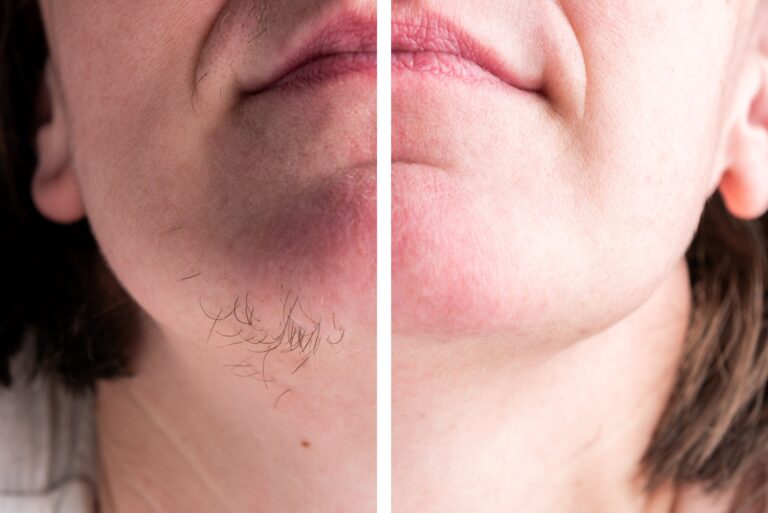
Polycystic Ovary Syndrome is a hormonal condition that affects how the ovaries function, but its impact extends far beyond reproductive health. One of the most visible and emotionally challenging symptoms is hirsutism, or excess coarse hair growth in areas such as the chin, jawline, upper lip, chest, and abdomen.
Why PCOS Causes Persistent Hair Growth
The root cause is elevated androgen levels, particularly testosterone. These hormones directly influence hair follicles in several ways:
- They convert fine vellus hairs into thicker terminal hairs
- They extend the growth phase, allowing hair to grow longer and faster
- They can activate previously dormant follicles, leading to new hair growth over time
This combination creates a cycle where hair is not only more visible but also more resistant to conventional removal methods.
Why Traditional Hair Removal Falls Short
Most common hair removal methods only address the surface:
- Shaving cuts hair at the skin level, allowing for quick regrowth
- Waxing and threading pull hair from the root—but do not affect the follicle
- Depilatory creams dissolve hair but leave the follicle intact
Because the follicle remains active, hair inevitably returns, often quickly and sometimes thicker in appearance.
Why Electrolysis Is the Gold Standard for PCOS Hair Removal
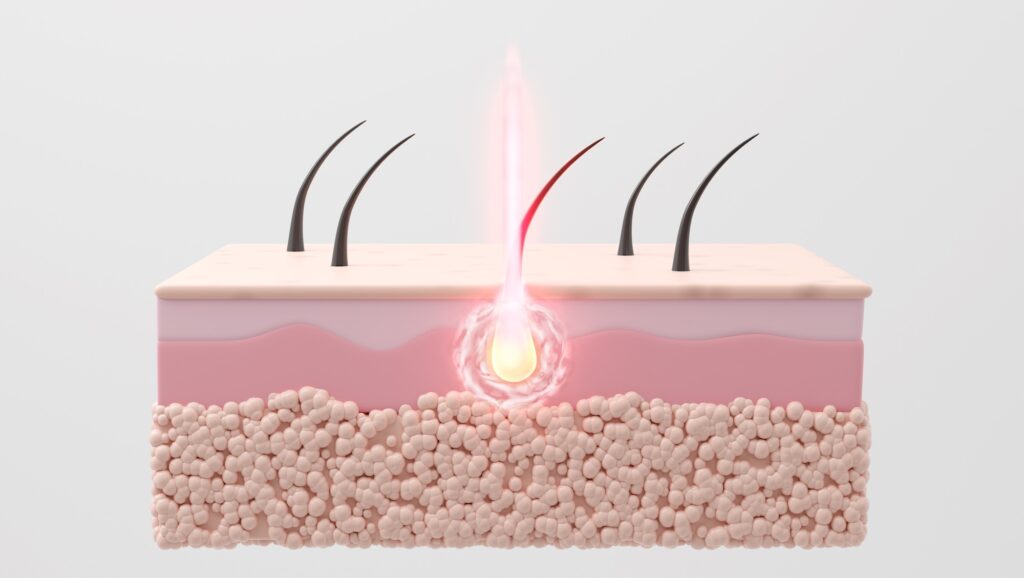
Electrolysis stands apart because it targets the source of the problem: the follicle itself.
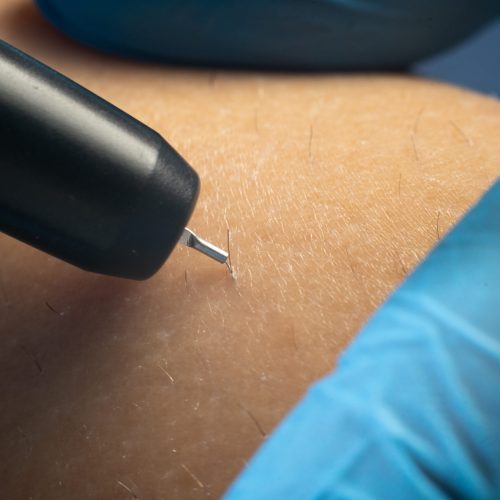
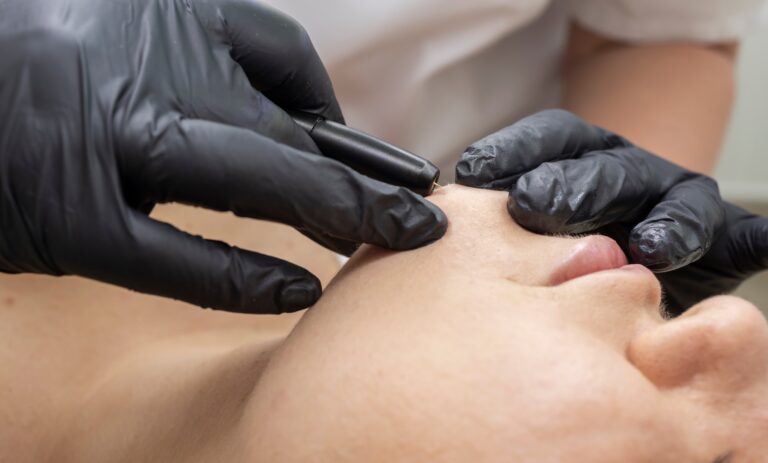
During treatment, a sterile probe is inserted into the natural opening of the hair follicle. A controlled electrical current is delivered to destroy the cells responsible for hair growth. Once a follicle is properly treated, it loses its ability to produce hair permanently.
What Makes Electrolysis Different
Electrolysis is uniquely effective for PCOS because:
- It treats each follicle individually, ensuring precision
- It does not rely on pigment, unlike laser
- It can permanently eliminate even hormonally stimulated hair
Electrolysis vs. Laser Hair Removal for PCOS
Understanding the difference between these two methods is critical when dealing with hormonally driven hair growth.
- Electrolysis
- Permanent hair removal
- Works on all hair types and colors
- Ideal for facial and precision areas
- Longer appointment times
- Laser Hair Removal
- Long-term reduction, not permanent removal
- Works best on dark hair with light skin contrast
- Covers larger areas more quickly
Laser can be useful for reducing bulk hair very quickly, but potential touch-ups may be necessary after a few years. Many clients with unwanted facial hair choose laser hair removal, because they want to remove the hairs as quick as possible. They may elect for electrolysis down the road, once there are less active hair follicles to target.
Why Electrolysis Works on Light and Resistant Hair
One of the biggest limitations of laser hair removal is its dependence on melanin. Without sufficient pigment, the laser cannot effectively target the follicle.
Hair Types Laser Struggles With
- Blonde hair
- Gray hair
- White hair
- Fine or sparse regrowth
Electrolysis bypasses this limitation entirely by delivering energy directly into the follicle, regardless of hair color.
The Electrolysis Treatment Process
Electrolysis is a progressive treatment that aligns with the natural hair growth cycle.
Understanding the Hair Growth Cycle
Hair grows in three phases:
- Anagen (active growth phase) – the ideal stage for treatment
- Catagen (transition phase)
- Telogen (resting phase)
Only hairs in the anagen phase can be effectively destroyed, which is why multiple sessions are necessary.
What Happens During Treatment
A typical session involves:
- Inserting a fine probe into each follicle
- Delivering controlled electrical energy
- Removing the treated hair with tweezers
Each follicle must be treated individually, making electrolysis highly precise but also time-dependent.
Treatment Timeline
Electrolysis requires commitment, but the results are cumulative and permanent.
Phase 1: Initial Clearance (0–6 months)
- Frequent sessions (weekly or biweekly)
- Focus on removing all visible hair
- Noticeable reduction in density and regrowth speed
Phase 2: Reduction (6–18 months)
- Hair grows back finer and more slowly
- Fewer follicles remain active
- Sessions become shorter and less frequent
Phase 3: Maintenance (18+ months)
- Occasional touch-ups as needed
- Addresses new follicles activated by hormones
Consistency during the early phases is essential for achieving full clearance.
Aftercare: Protecting Your Skin and Results
Aftercare is a critical part of the process and directly impacts both skin health and treatment outcomes.
What to Expect After a Session
It is normal to experience:
- Mild redness
- Slight swelling
- Temporary sensitivity
These effects typically resolve within 24–48 hours.
Key Aftercare Guidelines
- Avoid touching or picking at treated areas
- Keep the skin clean and dry for the first 24 hours
- Avoid heat exposure (saunas, hot showers, intense workouts)
- Use gentle, non-irritating skincare products
Following proper aftercare reduces the risk of irritation and hyperpigmentation.
Cost of Electrolysis for PCOS
Electrolysis is typically billed by time rather than treatment area.
Average Pricing
- $60–$190 per hour (varies by provider and location)
What Affects Total Cost
- Hair density and thickness
- Size of the treatment area
- Frequency of sessions
- Hormonal activity
While the upfront cost may be higher than other methods, electrolysis often provides better long-term value by eliminating the need for continuous maintenance.
Combining Electrolysis with Medical Treatment
Electrolysis removes existing hair, but managing PCOS reduces future growth.
Common Medical Approaches
- Hormonal birth control
- Spironolactone (blocks androgen effects)
- Metformin (improves insulin sensitivity)
Why Combination Treatment Works Best
- Slows activation of new follicles
- Improves overall treatment efficiency
- Reduces long-term maintenance needs
This combined approach delivers the most consistent and lasting results.
Is Electrolysis Right for You?
Electrolysis is particularly well-suited for individuals who:
- Have facial hair caused by PCOS
- Are not seeing lasting results from laser
- Have light or resistant hair types
- Want a permanent solution rather than ongoing reduction
When a Hybrid Approach Makes Sense
In some cases, combining treatments is ideal:
- Laser for initial reduction of dense, dark hair
- Electrolysis for precision and permanent removal