
Electrolysis FAQs
The only method the FDA recognizes as permanent hair removal.
Everything clients ask before their first electrolysis session at Laser Affair in Tampa, answered by the certified electrologists who perform the treatment. If your question is not here, a phone consultation is free.
- How it works
- Sessions and cost
- Comfort and safety
- Laser or electrolysis
- Hair growth and hirsutism
- Before your appointment
- Prices
Tap any question to open it.
How it works
What happens inside the follicle, and why the FDA treats electrolysis differently from laser.
What is electrolysis and how does it work?
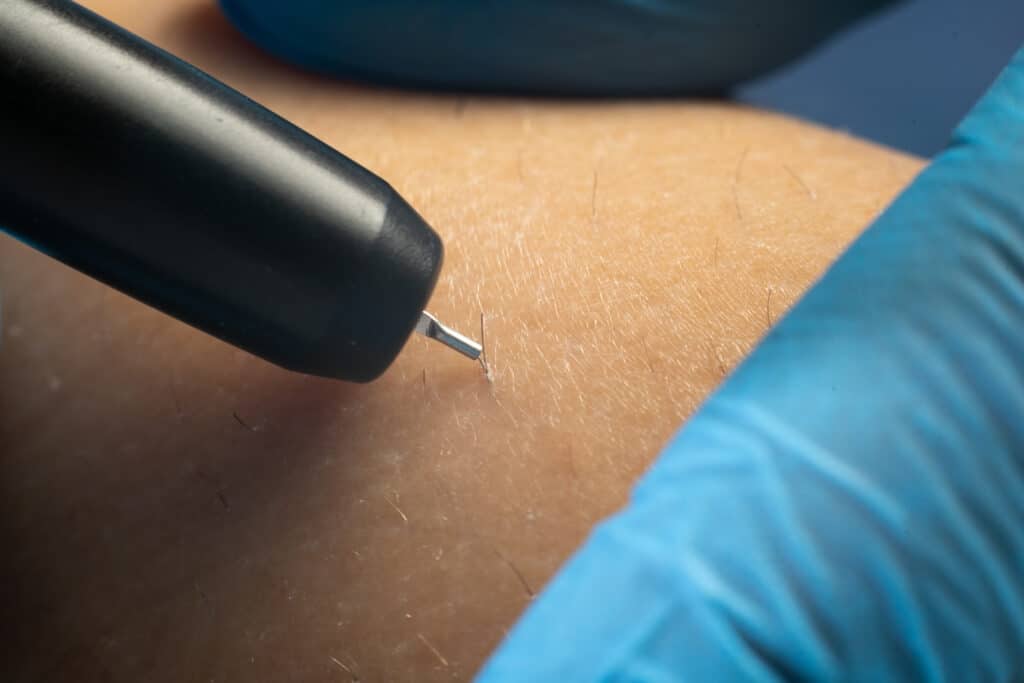
A fine probe is inserted into the hair follicle down to the root. Depending on the modality used, an electric current destroys the follicle through heat, chemical action, or a blend of both.
Electrolysis is most effective when the hair is treated in its active growth stage (anagen), which is why sessions are spaced to catch each follicle at the right point in its cycle.
What makes electrolysis permanent?
Electrolysis is the only method the FDA recognizes as permanent hair removal. Laser is classified as permanent hair reduction. Electrolysis destroys the cells responsible for hair growth while protecting the skin surface, and it can be used on all hair colors and skin types.
What treatment methods are used?
Laser Affair performs electrolysis on the Apilus xCell Pur. All four modalities are safe and effective, and your electrologist selects the one that suits the hair being treated.
- Galvanic (DC)
- Destroys the follicle through chemical action.
- Thermolysis (HF)
- Destroys the follicle through heat.
- Blend
- Combines heat and chemical action.
- Synchro
- An Apilus-exclusive modality, highly effective for distorted or deeply rooted hairs.
What is cataphoresis?
A soothing post-treatment technique that reduces redness and inflammation, restores the skin's pH, and promotes healing.
Sessions and cost
How many visits to expect, how long they run, and how the time-based pricing works.
How many sessions will I need?
Hair grows in cycles, and not all follicles are visible at the same time. Most body areas cycle fully within 12 to 18 months (legs may take longer). Your total treatment time depends on:
- Body area treated
- Hair density and structure
- Previous temporary hair removal methods
- Hormones, medications, and hereditary factors
Consistent treatments are key. Most clients begin with weekly or biweekly appointments, then gradually decrease frequency.
How long is a session?
Sessions may be as short as 15 minutes or as long as a few hours, depending on the number of hairs treated.
How much does electrolysis cost?
Fees are based on treatment time rather than body area, from 15-minute sessions to multi-hour appointments. Because hair growth is cyclical and influenced by hormones and other factors, total cost and duration vary by client. We can give a clearer estimate after your first few sessions. Current per-session prices are listed below.
Do I need a consultation if I have had electrolysis before?
Yes. We review health history, answer questions, and discuss office policies. Most clients can begin treatment during the same appointment.
Comfort and safety
What treatment feels like, who should not be treated, and when we ask for medical clearance.
What does electrolysis feel like? Is it painful?
Insertion is typically not felt because the probe follows the follicle. Sensation during treatment ranges from warmth to a sharper feeling similar to plucking. Settings can be adjusted for comfort, and clients may take acetaminophen or apply a topical anesthetic beforehand if desired. Our equipment is designed for maximum comfort.
Is electrolysis safe?
Yes. Electrolysis has a long safety record with no known serious long-term complications when performed by a licensed electrologist. Temporary redness, pinpoint bleeding, or mild crusting can occur. You will receive detailed aftercare instructions.
Do you treat mature skin?
Yes. Electrolysis is safe and effective for mature skin, especially for white, gray, and blonde hairs that lasers cannot remove.
Can a pregnant person receive electrolysis?
We avoid electrolysis during pregnancy.
Can someone with epilepsy be treated?
Electrolysis has not been shown to trigger seizures, but because the treatment uses electrical current, we require medical clearance first.
When is electrolysis not safe?
Contraindications include:
- Pregnancy
- Active hepatitis or HIV
- Electronic implants such as pacemakers
- Active herpes simplex or eczema in the treatment area
- Current or recent Accutane (within 6 months)
- Diabetes (no treatment on hands, feet, or lower legs)
Laser or electrolysis
We offer both in the same studio, so the recommendation is based on your hair and skin rather than on what we sell.
Should I choose laser or electrolysis?
It depends on your hair color, skin tone, and goals.
Laser is ideal for
- Dark, coarse hair
- Larger areas like legs, back, or full arms
Electrolysis is ideal for
- White, gray, blonde, or red hairs that laser cannot target
- Precision areas such as brows and upper lip
- Hormonal or medically related hair growth
- Clients who want permanent removal rather than reduction
Laser Affair offers both methods and will recommend the best combination for your goals.
Which areas can be treated?
Electrolysis is safe for all skin types and can treat almost any area except inside the nose and inside the ears. Common areas include brows, lips, chin, jawline, breasts, underarms, and bikini line.
For large areas such as the back, arms, and legs, laser is recommended first, followed by electrolysis on any remaining light or resistant hairs.
Hair growth and hirsutism
Why new hairs can appear after treatment, and what that does and does not mean.
What is the hair growth cycle?
Hair moves through three phases:
- Anagen
- Active growth. This is the stage electrolysis targets.
- Catagen
- Transitional phase.
- Telogen
- Resting and shedding phase.
Because not all hairs are visible at once, new hairs that appear later are usually from dormant follicles rather than regrowth from treated ones.
Will electrolysis get rid of my hair for good?
Successfully treated follicles will not grow back. Electrolysis cannot, however, prevent new hairs from forming because of hormonal changes, medications, genetics, or medical conditions. It remains the only method that permanently destroys the follicles it treats.
What is the difference between terminal and vellus hair?
- Terminal hair
- Coarse, thick hair, such as scalp, pubic and underarm hair, and face and body hair in men.
- Vellus hair
- Soft, fine body hair. It can convert to terminal hair because of hormones, genetics, or stimulation.
What is hirsutism?
Excessive, often hormone-related hair growth in women. Causes include puberty, pregnancy, menopause, medications, illness, obesity, and genetics. A doctor should diagnose the cause. Electrolysis is the method that permanently removes the hair itself.
What is unexplained hirsutism?
Some women have follicles that are abnormally sensitive to normal androgen levels. The tendency runs in families, though its underlying cause is unknown.
Before your appointment
One rule covers most of it: let the hair grow, and do not pull it.
Do I need hair growth before my session?
Yes. Hair must be long enough to grasp with tweezers, which usually means about 3 to 5 days of growth. Avoid plucking, waxing, threading, or anything else that removes the hair from the follicle, as this disrupts treatment effectiveness. Shaving is fine up until a few days before.

Apilus xCell Pur. Every electrolysis session at Laser Affair is performed on this system by a Florida-licensed electrologist. Under Florida law, only licensed electrologists, physicians, PAs, and APRNs may perform permanent hair removal.
Electrolysis prices
Electrolysis is booked in time blocks rather than by area, so you only pay for the time your session actually takes. No packages, no contracts, no memberships.
Prices are per session. Your electrologist will estimate how much time your area needs at your free consultation.
| Session length | Face | Body | Bikini |
|---|---|---|---|
| 1 to 30 minutes | $90 | $95 | $110 |
| 31 to 45 minutes | $120 | $125 | $150 |
| 46 to 60 minutes | $150 | $155 | $190 |
Not sure how long your area will take? A phone consultation is free and there is no obligation.
Ready to book, or still have a question?
Book a session online, or call 813-944-2445 and one of our electrologists will talk through your area, hair type, and how long to expect.