
If you’ve been researching hair removal options, you’ve almost certainly come across the claim that electrolysis is permanent — and you’ve probably wondered whether that’s actually true or just clever marketing. It’s a fair question. The hair removal industry has its share of overpromising, and the words “permanent,” “lasting,” and “long-term” get thrown around in ways that don’t always mean the same thing.
Here’s the short answer: Yes, electrolysis is permanent. It is, in fact, the only hair removal method the U.S. Food and Drug Administration recognizes as truly permanent. Once a hair follicle is properly destroyed by electrolysis, it cannot regrow hair — period. But there’s nuance behind that statement that anyone considering treatment deserves to understand, including how the science works, what “permanent” does and doesn’t promise, and how electrolysis compares with laser hair removal for different goals.
This guide walks through all of it.
Key Takeaways
- Electrolysis is the only FDA-recognized method of permanent hair removal. Laser hair removal is FDA-cleared for “permanent hair reduction” — a different and more limited claim.
- Once a follicle is properly treated by electrolysis, it cannot grow hair again. The growth cells inside the follicle are destroyed.
- “Permanent” applies to follicles that have been treated. Hormonal changes can convert previously dormant, untreated follicles into new terminal hairs later in life — but those are new follicles, not the return of treated ones.
- Permanence is achieved gradually. Most people need 8–18 months of consistent sessions to fully clear an area, because hair grows in cycles and electrolysis is most effective during the active growth phase.
- Electrolysis works on every hair color and every skin tone, including the white, gray, red, and light blonde hair that lasers cannot target.
- Both electrolysis and laser have a place. Laser is well-suited to large areas of dark hair; electrolysis is the gold standard for permanent results, hormonal hair, light-colored hair, and precision work on small areas.
What “Permanent Hair Removal” Means in FDA Terms
The word “permanent” is regulated. In the United States, the FDA’s Center for Devices and Radiological Health (CDRH) classifies hair removal devices and dictates what each can claim.
- Electrolysis devices are recognized for “permanent hair removal.” They are typically classified as Class I medical devices.
- Laser hair removal devices are cleared for “permanent hair reduction.” They are Class II medical devices that must go through FDA 510(k) premarket review.
This isn’t a marketing distinction — it’s a regulatory one. The American Electrology Association recently confirmed, in correspondence with the FDA, that the agency continues to recognize electrolysis as the sole technique officially acknowledged for permanent hair removal, while laser-based technologies are still characterized as providing long-term hair reduction rather than removal. Cleveland Clinic likewise describes electrolysis as the only FDA-approved permanent hair removal treatment, because it destroys the growth cells in the follicle so the hair cannot grow back.
So when an electrolysis provider says “permanent,” they’re using the term the FDA itself has assigned. When a laser provider says “permanent reduction,” they’re being accurate to the FDA’s clearance language. Both can deliver excellent results — but only one carries the formal designation of permanent removal.
The Science: Why Electrolysis Actually Works Forever
To understand why electrolysis is permanent, it helps to know what’s actually inside a hair follicle.
Each follicle contains a structure called the dermal papilla at its base, plus a region called the bulge that houses the stem cells responsible for regenerating hair throughout your lifetime. These two structures together are what allow a follicle to keep producing hair, cycle after cycle, for decades. If you destroy them, the follicle loses its ability to regrow hair. Permanently.
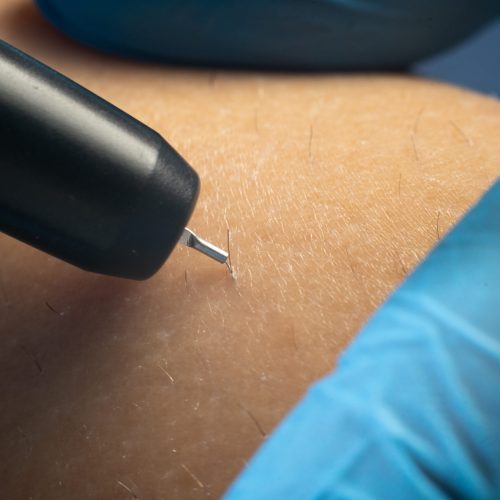
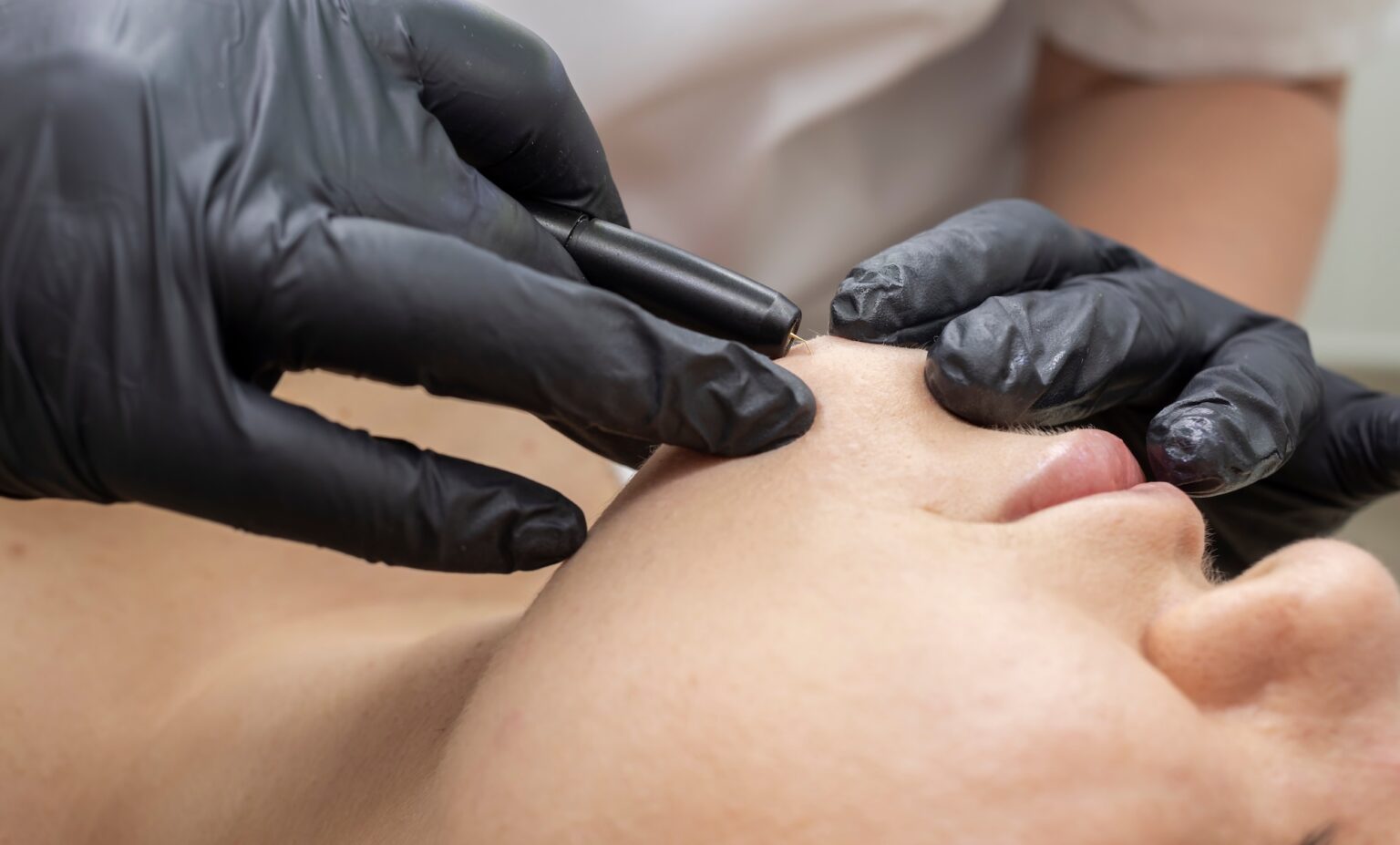
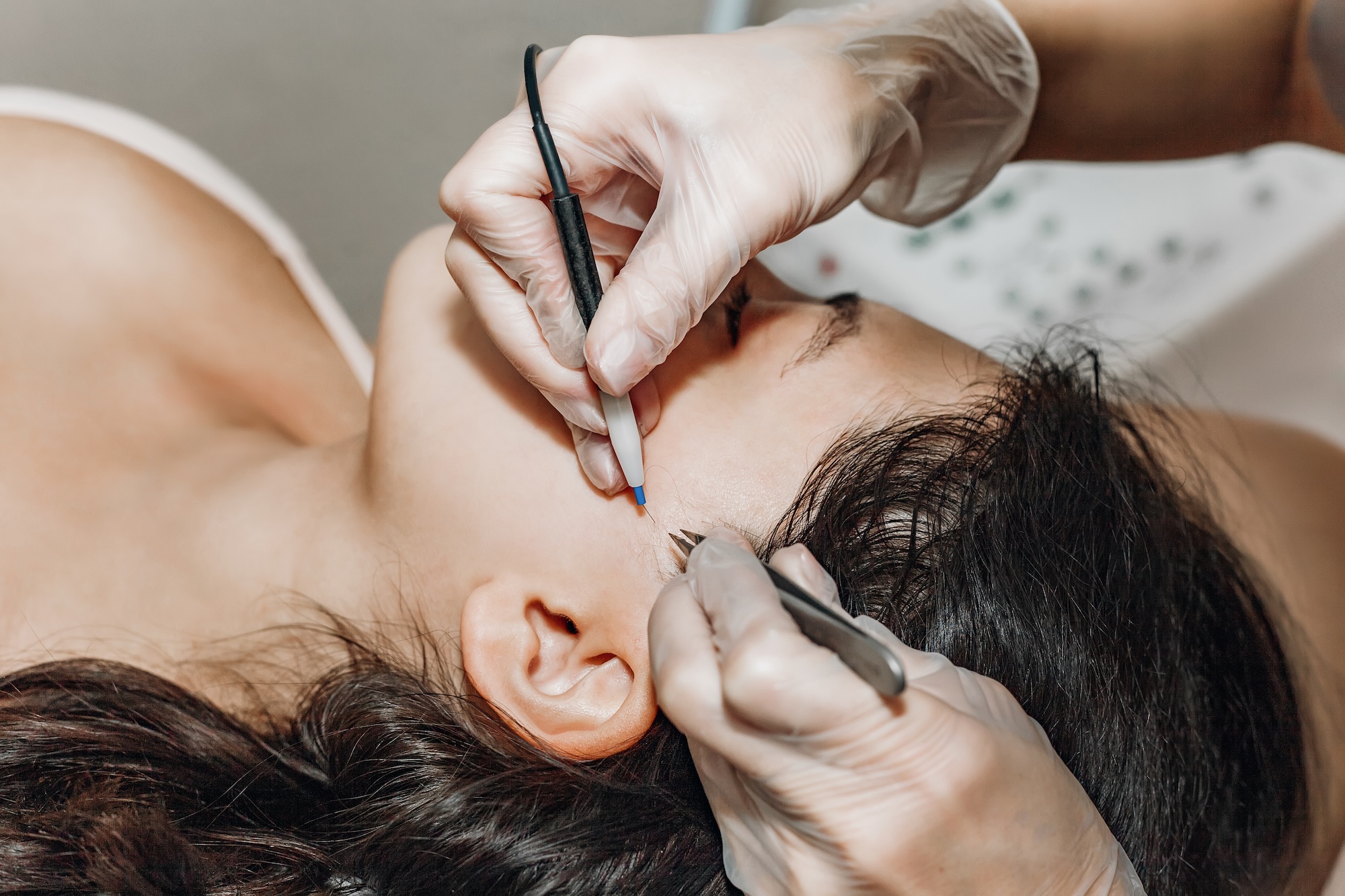
Electrolysis works by inserting a fine, sterile probe — often even thinner than the hair itself — into the natural opening of the follicle. A precisely controlled electrical current is then delivered. There are three modalities, all FDA-recognized:
- Galvanic electrolysis uses direct current to chemically destroy the follicle by producing sodium hydroxide (lye) at the base.
- Thermolysis uses high-frequency alternating current to generate heat that destroys the follicle.
- Blend combines both galvanic and thermolytic action in a single insertion. Many electrologists consider blend the most effective approach for stubborn or hormonally-driven hair, because it pairs the chemical destruction of galvanic with the speed of thermolysis.
Modern systems like the Apilus xCell Pur — which we use at Laser Affair — deliver this current with extraordinary precision, allowing the energy to be calibrated to each individual hair and skin type. That precision matters: it’s what produces full follicle destruction with minimal discomfort and no surrounding skin damage.
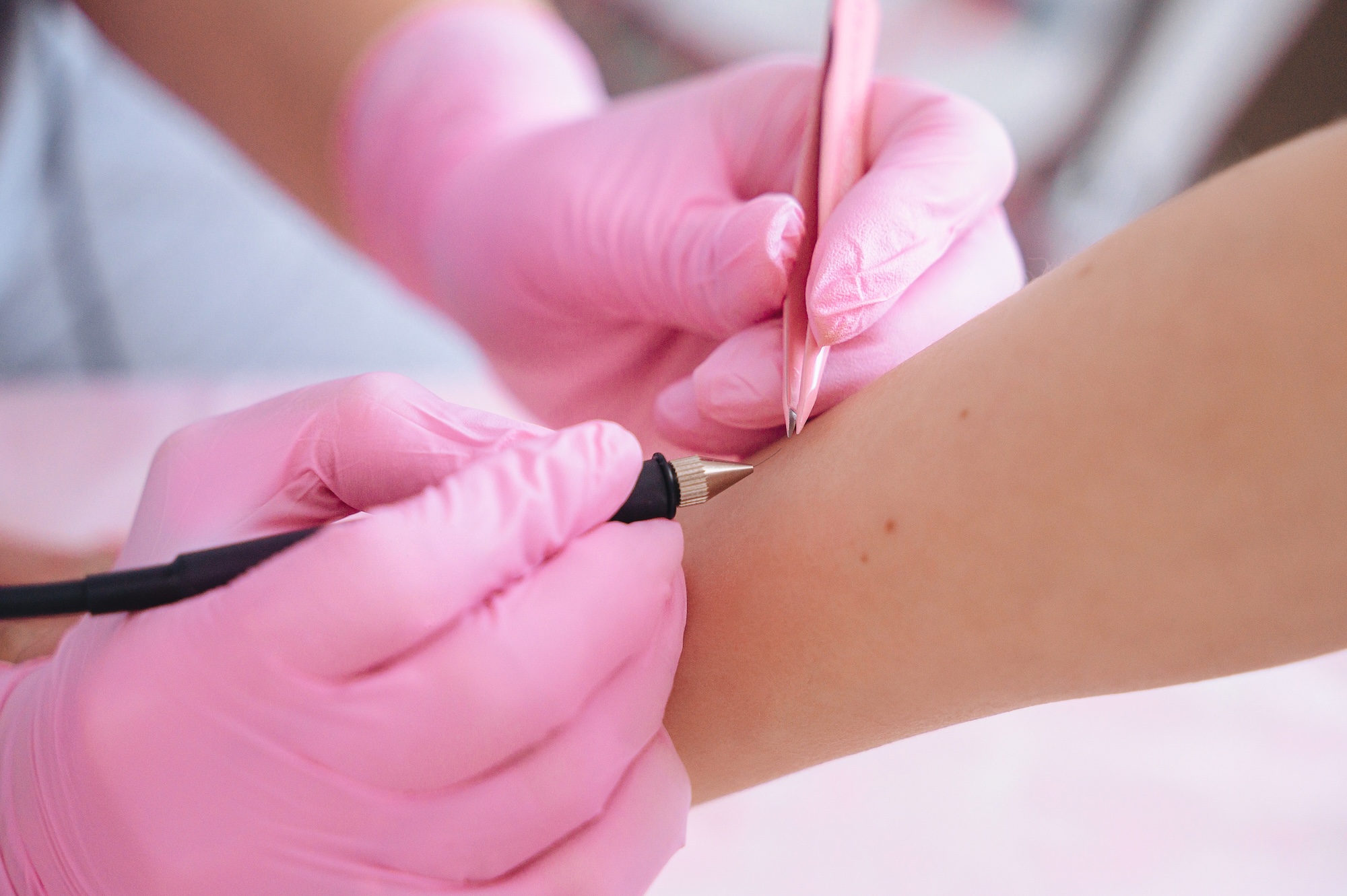
When the procedure is done correctly during the right phase of the hair growth cycle (anagen, the active growth phase), the follicle is destroyed at its source. There are no growth cells left to regenerate the hair. That’s the mechanism that makes electrolysis permanent.
“But I’ve Heard People Say Their Hair Came Back” — Here’s What’s Actually Happening
This is the most important nuance in any honest discussion of electrolysis permanence, and it’s where a lot of confusion comes from.
When someone says their hair came back after electrolysis, one of three things is usually true:
1. The follicle wasn’t fully destroyed in that session. Electrolysis is technically demanding. If the probe doesn’t reach the full depth of the follicle, or if the current isn’t strong enough, only a partial treatment occurs. The hair can regrow from the surviving growth cells, often finer or weaker than before. This is why electrologist skill, training, and equipment quality matter so much, and why most areas need multiple sessions to achieve full clearance — both to catch hairs in the right cycle and to re-treat any partial results.
2. The hair was in the wrong cycle. Hair grows in three phases: anagen (active growth), catagen (transition), and telogen (rest). At any given moment, only a portion of the hairs in any area are in anagen, the only phase where the follicle is fully connected to its growth cells and can be reliably destroyed. Hairs in telogen may shed and regrow not because they were treated and failed, but because they hadn’t yet been treated. This is exactly why electrolysis requires a series of appointments — to catch every follicle in its active phase.
3. New follicles became active. This is the crucial one. The skin contains thousands of dormant or vellus (peach-fuzz) follicles that have never produced terminal hair. Hormonal shifts later in life — pregnancy, menopause, polycystic ovary syndrome (PCOS), thyroid changes, certain medications — can convert these previously dormant follicles into terminal hair producers. This new hair isn’t your old hair returning. It’s hair from follicles that simply weren’t there to be treated before. Electrolysis can permanently remove these new hairs as they appear, but it can’t preemptively treat a follicle that hasn’t yet activated.
So the precise way to state it is: electrolysis permanently removes the follicles it treats. It does not prevent your body from producing new follicular activity in response to hormonal change. That’s a meaningful distinction, but it’s not a knock against permanence — no hair removal method, of any kind, can prevent future hormonal hair from appearing.
How Long Does Electrolysis Take to Become Permanent?
Permanence is achieved gradually. You don’t walk out of a single appointment with a permanently hair-free zone, because of how the hair growth cycle works.
Industry-standard timelines look something like this:
- Most people need between 8 and 18 months of regular sessions to fully clear an area, with 12 to 24 months sometimes required for larger or hormonally-influenced regions.
- Sessions are typically scheduled weekly or every two weeks at the start, then spaced further apart as hair density decreases.
- A small facial area like the upper lip might be cleared in 8–18 sessions; a chin in 12–18; a full face in 30+ sessions over 12–18 months.
- Each session itself is short — usually 15 to 60 minutes.
Cleveland Clinic notes that appointments can extend over a year and a half, with the exact length depending on the body area and hair type. Larger areas and coarser hair require more total time. The key to staying on the shorter end of any timeline is showing up consistently — irregular appointments mean you miss hairs in their active phase, and the whole process takes longer.
The reward for that patience is unique among hair removal options: at the end of treatment, you don’t need maintenance sessions for the treated hair. It’s gone for good.
Electrolysis vs. Laser: Both Are Excellent — for Different Things
At Laser Affair, we offer both electrolysis and laser hair removal, and we genuinely believe both have a meaningful role to play. Choosing between them — or combining them — depends on your hair color, your skin tone, the area you want treated, and whether your goal is permanence or significant long-term reduction.
Laser hair removal is an excellent choice when:
- You’re treating large areas (legs, back, chest, full bikini) and want efficiency
- Your hair is dark and your skin tone allows for safe treatment
- Significant long-term reduction is the goal, with some maintenance accepted over time
- You want fewer sessions per area
Electrolysis is the better choice when:
- Your hair is white, gray, red, or light blonde — laser can’t target it
- You want truly permanent results, not reduction
- You’re treating small precision areas like brows or beard line shaping
- The hair is hormonally driven (PCOS, perimenopause, post-menopausal chin and lip hair)
- You’re doing pre-surgical clearance for gender-affirming procedures, where every follicle in the surgical site must be permanently removed
Many of our clients use both. Laser handles the large body areas where speed and efficiency matter most, and electrolysis finishes the job on lighter hairs the laser misses, on hormonally sensitive facial zones, and on precision detail work. The combination often produces the most complete result of either method alone.
| Feature | Electrolysis | Laser Hair Removal |
|---|---|---|
| FDA designation | Permanent hair removal | Permanent hair reduction |
| Works on all hair colors | Yes | No (needs pigment) |
| Works on all skin tones | Yes | Yes with the right device (e.g., Nd:YAG) |
| Speed per session | Slower (hair by hair) | Faster (treats large areas) |
| Sessions to clear an area | More (often 12–30+) | Fewer (typically 6–10), plus maintenance |
| Best for | Facial hair, hormonal hair, mixed-color hair, precision work | Large areas of dark hair |
Will Electrolysis Stay Permanent as I Age?
Treated follicles will. New hormonal shifts can produce new hair from previously dormant follicles, especially in areas like the chin, upper lip, and jawline as women approach perimenopause and menopause. This is biology, not a failure of treatment.
The good news: those new hairs respond just as well to electrolysis as the originals did. Many of our long-term clients come in for occasional brief touch-up sessions in their 40s, 50s, and 60s as new hairs emerge — far less than they used to need, but enough to keep things smooth. (You can see real client results in our before-and-after gallery.) This is sometimes called a “maintenance pattern,” but it’s important to understand it’s maintenance for new hair, not regrowth of treated hair.
Frequently Asked Questions
For more detailed answers to common electrolysis questions, see our full Electrolysis FAQ page.
Is electrolysis really FDA-approved as permanent?
Yes. The FDA recognizes electrolysis as the only method of permanent hair removal, and it has reaffirmed this position publicly. Laser hair removal is FDA-cleared only for permanent hair reduction.
Does the hair grow back after electrolysis?
Hair from a properly treated follicle does not grow back. New hair growth in the same area can occur if previously dormant follicles become active due to hormonal change, but those are new follicles, not the regrowth of treated ones. They can also be permanently removed with additional electrolysis.
How many sessions does it take for electrolysis to be permanent?
For most people, 8–18 months of consistent sessions is typical for full clearance of an area. Smaller areas like the upper lip may need 8–18 visits; larger or hormonally-influenced areas may need more. Each session is 15–60 minutes.
Does electrolysis work on white, gray, or blonde hair?
Yes — and this is one of its biggest advantages over laser. Electrolysis doesn’t rely on pigment, so it works on every hair color and every skin tone.
Is electrolysis painful?
Most clients describe it as mildly uncomfortable rather than painful — a quick warm tingle or pinprick. Modern equipment like the Apilus xCell Pur has substantially reduced the discomfort that older systems were known for. Topical numbing cream is available for sensitive areas.
Can I do laser first and then electrolysis to clean up?
Yes, and many clients do exactly this. Laser is used to reduce dense, dark hair across larger areas, and electrolysis follows up on remaining lighter hairs and precision shaping. Just be aware that for hormonal facial hair, going straight to electrolysis is often more efficient.
Is electrolysis safe for darker skin tones?
Yes. Because electrolysis doesn’t target pigment, it carries no risk of the burns, hyperpigmentation, or hypopigmentation that can occur with laser on darker skin. It’s safe for every Fitzpatrick skin type. (That said, modern Nd:YAG laser technology has made laser hair removal much safer for brown and Black skin than it used to be — so for many clients with darker skin tones, the choice between laser and electrolysis comes down to hair color and area, not safety.)
The Bottom Line
Electrolysis is permanent — both in the FDA’s regulatory definition and in the underlying biology of the procedure. Properly treated follicles cannot grow hair again. The two things to understand realistically are that (1) achieving full permanent clearance takes a series of sessions over many months, because hair grows in cycles, and (2) hormonal change later in life can produce new hair from new follicles, which is a separate phenomenon from treated hair “coming back.”
For people who want hair gone for good — especially on the face, on light-colored hair, on hormonally driven hair, or on any skin tone where laser is a poor fit — electrolysis remains the gold standard, and has been for over 140 years.
Considering Electrolysis in Tampa?
At Laser Affair, our Certified Medical Electrologists and Certified Clinical Electrologists perform every electrolysis session using the Apilus xCell Pur — the most advanced and comfortable electrolysis system on the market. We offer both electrolysis and laser hair removal under one roof, so we can recommend the right modality (or combination of modalities) for your specific hair, skin, and goals.
If you’re not sure which option is best for you, that’s exactly what a consultation is for — and we’ve put together a list of questions you should ask during any hair removal consultation to help you make an informed choice.
Call 813-944-2445 Book A Consultation
15243 Amberly Dr #10, Tampa, FL 33647